

The “Buzz” on Education Animals: Who are they, really?
At the Elmwood Park Zoo, our feathered, furry, and scaly friends engage and educate the public with the help of trained zoo educators!
The Association of Zoos and Aquariums (AZA) issues guidelines to make sure animals and their educators have only positive interactions with the public.
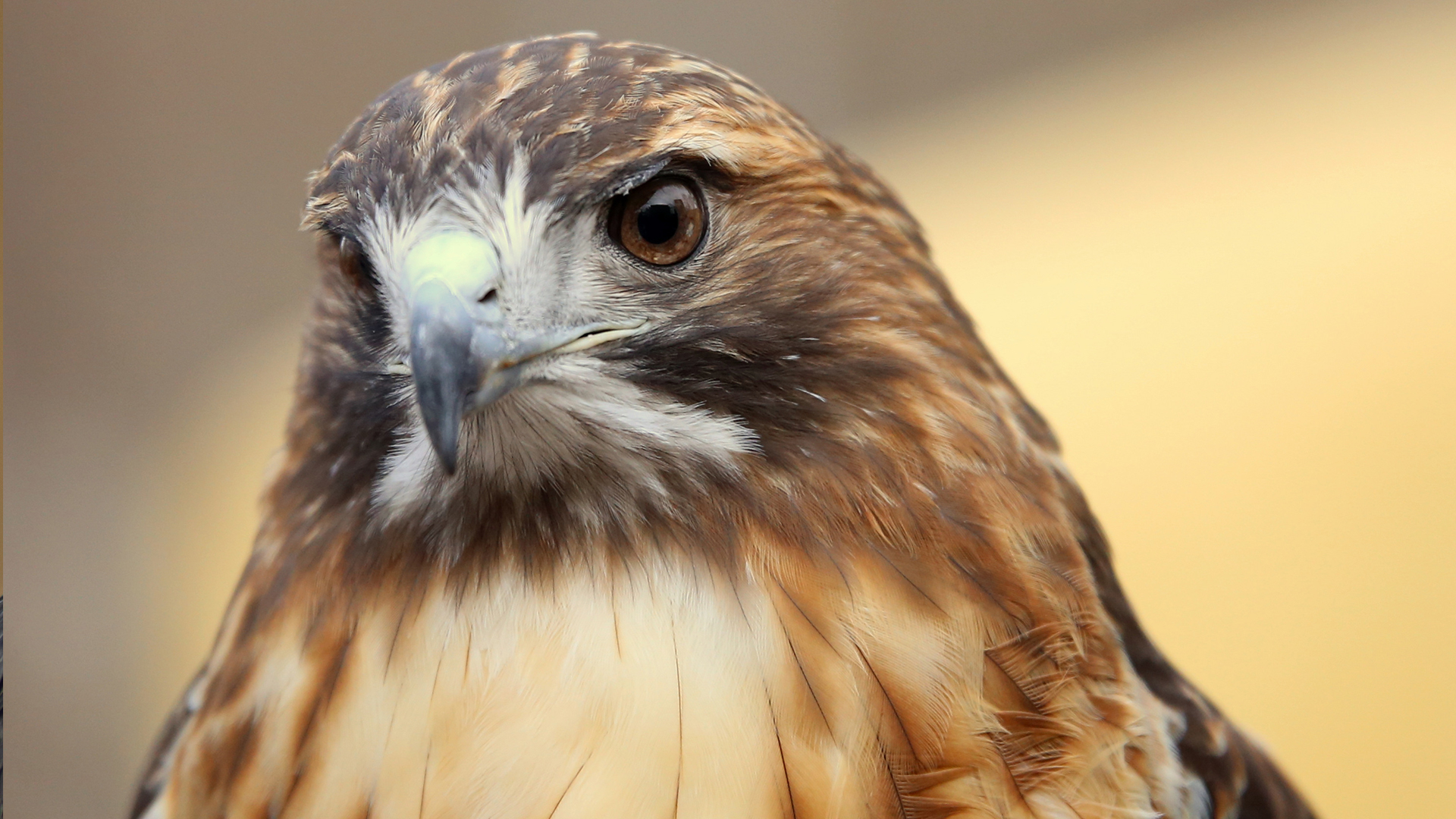
A live mascot is an animal that attends events with and represents a team, company, or university. Stella the great horned owl represents Temple University as their live mascot, and attends several of the university’s home football and basketball games throughout the year.
An educational animal attends events on zoo grounds and in the community to educate the public about topics like animal behavior, native species, conservation, and the role of zoos. These animals help represent the educational mission of the Elmwood Park Zoo.
When there is an opportunity and a right fit, educators may consider an education animal for a mascot role. Stella was a part of the education collection before becoming Temple’s live mascot.
Initially, educators look for an easy-going animal that won’t get startled in front of loud crowds that may move a lot during a program.
Potential animal ambassadors will first begin training to get accustomed to animal educators. After they begin to build these relationships, educators familiarize the animals with the crates that will be used for travel. Once they master this, the animals adjust to riding in a moving vehicle. Then these animals move on to their next challenge: meeting new people at crowded events. The length and intensity of the initial training is very dependent on the specific animal.
“Sometimes animals are not a right fit for the job,” said Laura Houston, Director of Education at Elmwood Park Zoo. “In that case, there might be a possibility for an animal to join the exhibit collection. We never force an animal to train.”
Similarly, animals are gradually “retired” if they experience health or age-related issues. Educators will begin to slowly cut back the animal’s training and appearances at events, and turn their focus to on-site care and enrichment.
The decision to include a specific animal at an educational event is based on a variety of factors: theme, audience, location, and driving distance.
Ambassador animals may be picked for a certain educational program because of the event’s location (indoor, outdoor, onsite, etc.). For example, education staff knows that Sherlock the great horned owl does better in small group situations, so he primarily participates in on-site events at the zoo, rather than at large auditoriums.
Similarly, animal ambassadors are restricted by the number of hours they can work in a day and the number of consecutive days they can work. The maximum amount of time an animal is allowed to attend an event is six hours, but it is rare that an animal would attend for that long. Most Zoo-on-Wheels events are four hours total.
There is a set 90 minute limit for Zoo-on-Wheels and other education programs. The only exemptions are Zoo Day in Harrisburg and the AZA Congressional Reception in Washington, D.C. In addition to time restrictions, there are also temperature guidelines to keep animals safe on the road.
Even seasoned animals can get overwhelmed on the job. While working, educators pay attention to an animal’s body language cues — like puffed up feathers or spread wings — to see if an animal may be experiencing stress.
Educators attempt to eliminate any and all sources of stress, like strobe lights, loud music, or other animals. If an animal shows signs of stress during a program, they are immediately given a break, and returned to their holding area.
Elmwood Park Zoo has been able to work closely with Temple University to provide the best situation for the animals visiting the university.
Stella, the live great horned owl mascot for Temple University, is a great example of flexibility during an event. She goes on the field at Temple games next to the band and cheerleaders, and educators know she is rock-solid with those events, because of her past appearance successes.
“We always send out guidelines to our clients in advance and rarely have issues with our animal ambassadors because the goal of our events is education, not entertainment.” Houston said.
The zoo’s education programs continue to be successful, as the zoo strives to bring educational components to the local community, and beyond!

Written by Paige Miller
How seasons affect zoo animal behavior
Many of the Elmwood Park Zoo animals, from the mightiest cougar to the stealthiest alligator, experience seasonal changes, just like people do!
“There is no universal answer for changes in different animal species when the temperature dips, or seasons change,” said Marina Haynes, General Curator at the Elmwood Park Zoo. “Every animal is an individual but sometimes we can detect patterns of change in their behavior.”
Whenever animal care staff notices changes in an animal’s behavior, they analyze what is happening to see if they can figure out the cause and if there needs to be concern or changes in the animal’s husbandry, said Haynes.
A Temperamental species
Penny, the Elmwood Park Zoo’s own American Alligator, is one animal in the zoo that splits her time between indoor and outdoor exhibits. Many ectotherms (cold-blooded animals), like Penny, have to move indoors because they cannot survive winter temperatures.
Even though Penny was living in an indoor exhibit with steady temperatures, once outdoor temperatures started to climb, her behavior changed. Her activity level increased dramatically because she sensed that it was getting warmer out. Animal care staff knew right away that Penny was saying she wanted to go back outside, though it was a bit too early to be safe.
Zookeepers wait until the final frost date of the season to move Penny, so she can stay outside without fear of the cold. If it is too cold, ectotherms can have trouble moving, and their bodily systems, such as digestion, slow down. This could cause food to decompose inside of the alligator’s digestive tract.
“Climate change is affecting when animals want to be moved,” said Haynes. “It used to be more predictable when seasons would change and temperatures would be within certain ranges but now we can have 80 degrees day in March and 50 degree days in June. This makes it challenging to know when it is safe for animals to be outside.”
Similarly, when the temperature dips, animals are moved to their indoor enclosures for the colder months. Zoos across the world have developed charts to understand when animals can access indoor and outdoor enclosures to best keep them safe.
A moody mammal
Sometimes an animal can get stressed when something changes in their environment. Animal care staff will monitor an animal with extra caution if they begin to lose weight, lose their appetite, or change their behavior from what they normally do. Sometimes the portions or contents of their meals will be evaluated and a health assessment will be conducted by the veterinary team to make sure there is not an underlying illness.
The Elmwood Park Zoo cougars have exhibited nervous behavior because they are not as acclimated to the presence of humans. This behavior makes sense since these cougars were wild orphans. Their mother was killed by a rancher so they have the natural wariness of humans that wild animals naturally possess.
Because of this, the cougars hide when school groups visit the zoo or when the zoo is very crowded. The excited screams and loud noises that larger crowds make startles them. The cougars are much less nervous in the winter months, when crowds are smaller and quieter.
With lots of time building relationships with animal care staff, the cougars have gotten calmer and more likely to make themselves seen, especially in the late afternoon when it is quieter. If you’re lucky, a cougar may lock eyes with you during your next Elmwood Park Zoo visit!
Written by Paige Miller