Monarch butterflies are iconic—one of the most recognizable butterfly species. But these orange and black beauties are in need of our help!
WHAT IS A MONARCH BUTTERFLY?
Monarchs are a poisonous species of butterfly known for their distinct black and orange pattern. Like any butterfly, they go through a transformation, starting out as caterpillars. These caterpillars are less than half an inch long when they hatch, and it only takes 2–3 weeks for them to become adult caterpillars. Along the way, they go through five stages, called instars.
Once they reach the 5th instar, they begin their metamorphosis by finding a place to make their chrysalis. Once the chrysalis is fully formed, it takes between 8–15 days before they emerge as butterflies. After emerging, they pump up their wings and, within only 3–4 hours, are ready to take flight and find nectar.
Typically, these butterflies only live for a few weeks! But there is one special generation that can live up to 10 times longer, surviving through the winter and beginning one of the most incredible migrations in the animal world.
A 3,000-MILE JOURNEY
Monarch butterflies make one of the longest migrations of any animal, traveling up to 3,000 miles! While they may be small, their powerful wings carry them from the northern United States and Canada all the way to forests in Mexico, where they overwinter.
Then, they begin the journey back north. The individuals who overwinter won’t be the generation that makes it all the way back. Instead, the 2nd and 3rd generations they produce along the way will continue the journey! Once these generations return north, the process starts all over again, with that final special generation—hatched in late August and early September—beginning the journey south once more.
This incredible migration also helps us understand why monarch conservation is so important. Their journey isn’t an easy one, and unfortunately, humans have made it even harder. Destruction of the forests where they overwinter has one of the largest impacts. While many butterflies can share a single tree, there is a limit, so fewer trees mean fewer butterflies can survive to begin the journey north. Pesticides and climate change are also major contributors to their decline.
Thankfully, there is hope!
HELPING MONARCHS AT ELMWOOD PARK ZOO
The 2025–2026 report showed a 64% increase in the monarch population from years prior. Here at the zoo, we support monarch conservation efforts that can help contribute to increases like these!
Right outside the Discovery Center classroom is a native plant pollinator garden that attracts many different species. One plant in particular, milkweed, is a host plant for monarch caterpillars. Monarchs lay their eggs on the leaves, and when the caterpillars hatch, they immediately begin eating the milkweed. For adult butterflies, we have even more areas throughout the zoo filled with pollinator plants they love to feed on, encouraging them to return year after year.
Our education department also participates in both rearing and tagging monarchs. Tagging is only done with the migrating generation. These tags—tiny stickers carefully placed on their wings—allow scientists to better understand how far monarchs are making it on their journey. From the end of August through September, we offer programming where guests can learn about monarch tagging and why it’s important, while also getting an up-close look at monarchs in different stages of their life cycle.
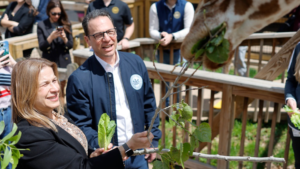
More recently, the zoo teamed up with John Ball Zoo through its Habitat Heroes program, which works to restore and protect native habitats. During our Party for the Planet event, free plants were given to guests who completed a quick survey that included their home location. That data is gathered to create a bigger picture of all the habitat corridors being created through the program.
HOW YOU CAN HELP
Helping monarchs in your own backyard can be as easy as planting a few monarch-friendly plants! Many are perennials, meaning once you plant them, they’ll return year after year. Whenever possible, avoid treating your yard or garden with chemical pesticides, which can be lethal to both caterpillars and adult butterflies.
And be sure to stop by the Zoo for our annual Monarch Madness program on August 29 to learn more! By providing backyard habitat, using sustainable practices, and supporting programs and educational opportunities like the ones here at the Zoo, you can help spread awareness and make a positive impact!