 MARY’S PERSPECTIVE: Leading the North American Porcupine SSP
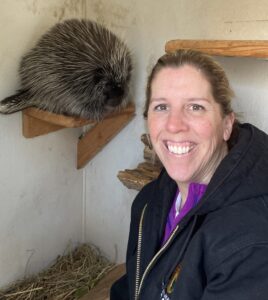
Being an SSP Program Leader and Studbook Keeper is both an honor and a lot of work. It involves coordinating with institutions across the U.S. and Canada on all things related to North American Porcupines. Right now, there is high demand for this species, as they make excellent ambassador animals and exhibit species.
North American porcupines are typically housed alone, with males and females only coming together to breed. If successful, about seven months later a single porcupette is born. Because of the long gestation and small litter size, the “wants” list is often longer than availability. Part of my job is tracking which zoos and aquariums are hoping to acquire a porcupine and determining where animals should be placed.
There are many factors to consider: whether a facility is willing to breed, their experience with the species, how long they’ve been on the waitlist, and genetics. Genetics is especially important. If an animal has produced multiple offspring, they may become overrepresented in the population. In those cases, we often recommend placement at a non-breeding facility.
About every two years, I send a survey to Institutional Representatives (IRs) at AZA facilities that either house or want porcupines. They complete the survey and return it to me. I then compile the information and work with a population biologist specializing in genetics to develop a Breeding and Transfer Plan. The proposed plan is sent back out to all IRs for review, and they can accept or decline the recommendations. Interim recommendations can also happen throughout the year, usually when an infant is old enough to leave its dam or a facility needs to relocate an animal.
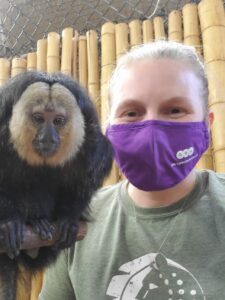 KATE’S PERSPECTIVE: Leading the White-faced Saki SSP
I’ve worked with White-faced saki monkeys for 14 years and have cared for seven different individuals. As mentioned, we’re one of 43 AZA-accredited facilities that house this species, with about 121 individuals in the population.
When I first started at the zoo, I never expected to fall in love with primates — but they’re so curious and intelligent, I couldn’t resist. Sakis are also a very laid-back primate species, which makes them great candidates for mixed-species exhibits. Over the years, our sakis have lived with howler monkeys, iguanas, tortoises, golden lion tamarins, marmosets, sloth, tamandua, Patagonian mara, and even muntjac! They’re incredibly adaptable and typically don’t mind sharing space — as long as their neighbors are respectful.
I’ve learned so much about husbandry, breeding, and training through my time with this species. The babies, in particular, are incredibly inquisitive. They’ll sometimes try to groom a keeper’s hair or play with our tools while we’re cleaning. It’s also been fun to be involved in training. All of our sakis are trained in a variety of behaviors, including going into a crate on cue. This is especially helpful for our veterinary team, as they will calmly crate themselves for exams and transport.
In 2024, AZA created a “vice coordinator” role to provide support and backup leadership for SSP Program Leaders. When the Saki SSP leader sent out an email seeking applicants, I was excited to apply. Having worked with several individuals and navigated social dynamics, I felt I could contribute in a meaningful way. All Institutional Representatives for the species voted on the applicants, and I was selected in September 2024.
Since then, I’ve gained even more insight into population management and helped participate in the most recent breeding and transfer plan last April — which is how Koetari came to Elmwood.
Recently, the long-serving SSP Coordinator and Studbook Keeper retired after about 10 years in the role. I formally applied and was selected in early January. I’m excited to be more directly involved in planning and population management, and I love sharing my experience with other facilities interested in the species.
I may be a little biased — but I truly think white-faced saki monkeys are the absolute best!